
Can I make my own Distortion Meter for properly setting gains?
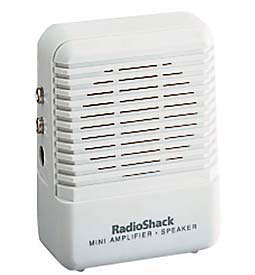
Properly setting amplifier and processor gains can optimize the Sound Quality and/or Sound Pressure Level of your car audio system. The best way to do this is with an oscilloscope. However, if you don’t have access to one, you can build a Do-It-Yourself Distortion Meter for around $30 with parts found at your local Radio Shack™. You’ll need a mini-amplified speaker and a couple of voltage dividers. These instructions include schematics for building the voltage dividers along with diagrams on how to connect and use them with your mini-amplified speaker.
NOTE: This article is a companion to "How to Properly Set Your Gains (Gain Tutorial)" and is based on the design developed by Richard Clark & Dave Navone of AUTOSOUND 2000 in the early 1990's.
Parts List
The below chart refers to seven items needed from your local Radio Shack™ store. The total cost for these components is around $30. Most of the parts needed are used to create two Voltage Dividers; one to measure the source unit output voltage, and another to measure the amplifier output voltage. These are needed because the sensitivity of the mini amplified speaker is so low, it can easily be over-driven. These voltage dividers “drop” the signal down to a safe level so we can properly drive the mini amplified speaker. If you don’t have wire and heatshrink, the chart also references these part numbers.
| Part # | Radio Shack Description | Price |
| 277-1008 | Mini Amplified Speaker | $14.99 |
| 274-0339 | 2PK Solder Type Phono Plug (RCA) | $3.79 |
| 274-0288 | 2PK Solder Type 1/8” Mono Phone Plug | $4.19 |
| 270-0356 | 2PK Fully Insulated 2” Alligator Clips | $2.59 |
| 55049108 | NTE EW110 1/8W Metal Resistor 100 Ohms 2% | $1.09 |
| 55049129 | NTE EW310 1/8W Metal Resistor 10K Ohms 2% | $1.09 |
| 55049134 | NTE EW410 1/8W Metal Resistor 100K Ohms 2% | $1.09 |
| SUB TOTAL | $28.83 | |
| Optional Parts | ||
| 55048778 | HS-6 in 1/8” Heatshrink Tubing in Assorted Colors | $2.20 |
| 278-1222 | 75-Ft. UL-Recognized Hookup Wire (20AWG) | $7.99 |
| SUB TOTAL | $10.19 | |
| GRAND TOTAL | $39.02 | |
 |
 |
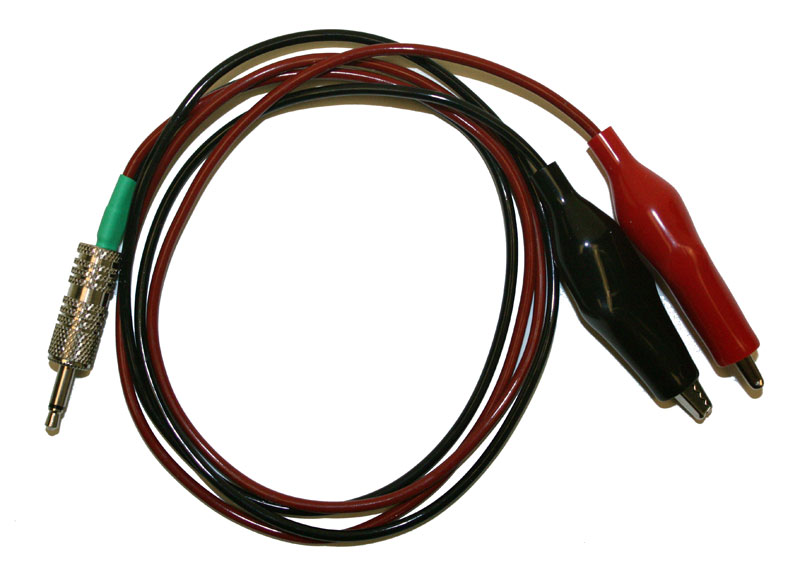 |
| Mini Amplified Speaker | Source Unit Voltage Divider | Amplifier Voltage Divider |
Source Unit Voltage Divider
The source unit voltage divider reduces the amplitude of the signal by 10:1 and can handle up to 10 Volts AC (most source units produce between 2V to 4V RMS). The resistors will be housed inside the 1/8” phone plug shell, so careful preparation is needed. Test fitting the components prior to soldering will ensure a proper fit.
Parts List
• (1) RCA Jack
• (1) 1/8” mini phone plug
• (1) 10,000 Ohm, 1/8 Watt resistor
• (1) 100 Ohm, 1/8 Watt resistor
• Assorted 1/8” heat shrink tubing
• 20” Red 20 AWG wire
• 20” Black 20 AWG wire
Assembly Instructions
1. Disassemble 1/8” plug and RCA jack.
2. Test fit resistors in place (once soldered, they can be trimmed to size).
3. Prepare and trim heat-shrink tubing to proper length.
4. Trim red and black 20 AWG wires to approximately 20” length.
5. Configure heat-shrink tubing and 1/8” phone shell in the order of assembly.
6. Solder resistors in place and trim off excess leads.
7. Position heat-shrink tubing in place and carefully heat with lighter to fit.
8. Prepare other end of harness by configuring RCA shell over wire ends.
9. Solder wire leads and reassemble RCA shell.
Source Unit Voltage Divider
R1 = 10k Ohm, 1/8 Watt
R2 = 100 Ohm, 1/8 Watt
Amplifier Voltage Divider
The amplifier voltage divider reduces the amplitude of the signal by 1,000:1 and can handle up to 100 Volts AC (that’s a pair of Power T2500-1bdCP amplifiers connected together in bd-SYNC mode). Like the previous method, the resistors will be housed inside the 1/8” phone plug shell, so careful preparation is needed. Test fitting the components prior to soldering will ensure a proper fit.
Parts List
• (1) RCA Jack
• (1) 1/8” mini phone plug
• (1) 100,000 Ohm, 1/8 Watt resistor
• (1) 100 Ohm, 1/8 Watt resistor
• Assorted 1/8” heat shrink tubing
• 20” Red 20 AWG wire
• 20” Black 20 AWG wire
Assembly Instructions
1. Disassemble 1/8” plug and Alligator Clips.
2. Test fit resistors in place (once soldered, they can be trimmed to size).
3. Prepare and trim heat-shrink tubing to proper length.
4. Trim red and black 20 AWG wires to approximately 20” length.
5. Configure heat-shrink tubing and 1/8” phone shell in the order of assembly.
6. Solder resistors in place and trim off excess leads.
7. Position heat-shrink tubing in place and carefully heat with lighter to fit.
8. Prepare other end of harness by sliding Alligator Clip sleeves over wire ends.
9. Solder wire leads and reassemble Alligator Clips with protective sleeves.
Amplifier Voltage Divider
R1 = 100k Ohm, 1/8 Watt
R2 = 100 Ohm, 1/8 Watt
Test Configuration for Source Units
1. Insert 1kHz @ 0dB test tone into CD Player.
2. Slowly increase volume until "raspy" sound emits from speaker.
3. Once you determine the clipping point of the source unit, DO NOT adjust the source unit's volume control until you have completed amplifier configuration(s) below.
4. Reconnect RCAs from source unit to amplifier system.
Test Configuration for Mono & Stereo Amplifiers
1. Slowly increase amplifier GAIN until "raspy" sound emits from speaker.
2. If testing a Stereo amplifier; repeat test on both amplifier channels.
3. If testing a Mono amplifier; use either Speaker Outputs "A" or "B" on amplifier.
Test Configuration for Amplifier In Bridged Mode
1. Slowly increase GAIN on BOTH left/right channels equally until "raspy" sound emits from speaker.
• Download the PDF of this article
Comments
0 comments
Please sign in to leave a comment.